

Andhra Pradesh has long been an ambitious pioneer in India’s renewable energy landscape, but with the full operationalization of the Integrated Clean Energy (ICE) Policy 2024, the state has shifted from merely hosting solar farms to architecting a decentralized, storage-first economy. This policy serves as a master plan, providing a unified umbrella for solar, wind, BESS, and pumped storage projects. The most remarkable aspect for the average resident is the sheer lack of bureaucracy. In Andhra Pradesh, installing a home battery requires no prior permission. Not a form. Not an inspection. Not a months-long wait for a technical feasibility study. You simply inform your utility before you switch it on, effectively bypassing the red tape that stifles innovation in other states.
The most significant consumer-friendly differentiator in Andhra Pradesh’s current regulatory environment is the explicit allowance for retail consumers to install Behind-the-Meter (BTM) BESS. Whether installed with or without solar, these systems require zero prior permission from DISCOMs or the State Transmission Utility (TRANSCO). This is a radical departure from the standard Indian utility model, where approval processes can often stretch from six to eighteen months.
Furthermore, the state has removed the "Minimum Size Cap" for retail applications. While standard grid-connected BESS projects in the state must typically be at least 1 MW with two hours of storage, this restriction is completely waived for retail BTM systems and distribution transformer-level applications. This allows a small shopkeeper or a homeowner to install exactly what they need—whether it is a 5 kWh or a 20 kWh unit—without being penalized by industrial-scale requirements.
Join our growing network of partners and power the future of India by visiting
https://www.pureenergy.co.in/dealership-enquiry/
Beyond just saving money, Andhra Pradesh is leading the nation with the Distributed Energy Resources Aggregator (DERA) model. Instead of your home battery sitting idle once it has powered your evening lights, AP allows a third-party aggregator to pool your stored energy with thousands of other households.
This "Virtual Power Plant" can then bid your collective stored power into the state’s ancillary services market. When grid demand is at its absolute highest, your small home battery helps stabilize the entire state’s frequency and voltage. In return, you are compensated at dynamic "market-clearing prices," turning a household appliance into a proactive revenue stream. This globally leading policy ensures that localized storage isn't just a backup—it's a critical, liquid asset in the state's energy mix.
While the state is permissive with hardware, it is rigid with its "banking" rules. The December 2025 amendments to the Green Energy Open Access (GEOA) Regulations are firmly locked in a monthly billing cycle. All banked units must be utilized within the same calendar month; any excess over a 30% monthly consumption cap is automatically lapsed and credited to the utility.
However, the real challenge is the "Time-of-Day (ToD) Trap". Energy banked during off-peak solar hours (9 AM to 5 PM)—which is when your panels generate the most—is restricted. The utility refuses to let you draw these solar credits back during the expensive evening peak (7 PM to 11 PM).
The BESS Solution: By installing a BTM battery, you entirely bypass these banking rules. You capture your own afternoon solar surplus, store it locally, and discharge it during that 7 PM to 11 PM window. By doing so, you insulate yourself from the state's rigid ToD restrictions and the "Monthly Wipeout" of excess credits, retaining 100% of the financial value of your generated units.
To navigate this sophisticated landscape, prosumers require hardware that is as intelligent as the policy. PuREPower’s 5 kW (Home) to 120 kW (Commercial) BESS range is specifically engineered to meet these unique challenges.
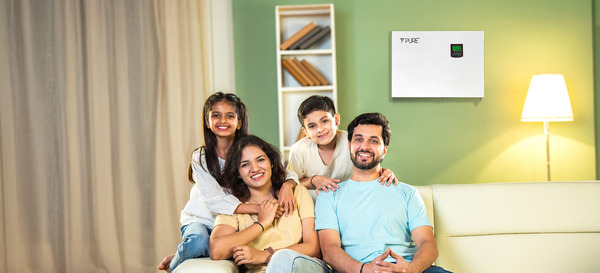
The Residential Edge: For households in the burgeoning Amaravati commercial zone, PuREPower’s 5 kW units offer a "Plug-and-Play" solution that fits perfectly within the "Zero Permission" framework.
The Industrial Workhorse: For the heavy-duty requirements of the Visakhapatnam steel belt and the Tirupati electronics cluster, our 120 kW commercial units allow captive projects to maximize their 100% sanctioned load allowance.
Arbitrage Ready: Every PuREPower system is designed to interface with the DERA aggregator model, ensuring you are ready to earn market-clearing prices the moment you commission your system.
Whether you are seeking to avoid the ToD Trap or capitalize on the ancillary services market, PuREPower provides the localized "Virtual Wire" that makes the ICE Policy 2024 work for your bottom line.
Ready to explore your options? Start by requesting a personalized quote:
https://www.pureenergy.co.in/enquiry-now/
Andhra Pradesh has created the most permissive and innovative BESS regulatory environment in India. By combining "No-Permission" installation with the forward-looking DERA model, the state is earning its title as the nation's Storage Capital. It is a system that trusts the consumer to be a partner in grid stability rather than just a passive ratepayer.
The rules of the grid have changed, and energy independence is now a verified fiscal strategy. Don't let your solar generation lapse or fall into the ToD trap.
To learn how PuREPower's BTM solutions can help you claim your energy sovereignty and join the DERA revolution, visit Lithium Batteries, Solar Inverters & UPS | PURE Energy India.

 Dealership
 Enquiry Now